
Outdoor dining furniture is an investment in comfort, style, and quality time with family and friends. However, sun, rain, humidity, and temperature swings can take a toll on even the best pieces if they aren’t properly cared for. The key to longevity is material-specific maintenance paired with thoughtful seasonal care.
In this guide, we’ll walk through how to care for the most common outdoor dining furniture materials — from wood and metal to plastics and woven fibers — as well as the best practices for maintaining outdoor cushions.
Common Outdoor Dining Furniture Materials & How to Care for Each
1. Wood Dining Furniture

Wood brings warmth and natural charm to outdoor spaces, but it is vulnerable to moisture and UV damage. When it comes to wood outdoor dining furniture, these are the most popular picks—they’re durable, stylish, and perfect for meals al fresco: Teak, eucalyptus, acacia, cedar.
Care Tips:
1. Seal & oil
Grab a quality wood sealant or teak oil—apply it at least twice a year, and your dining set will thank you! This simple step protects it from moisture (which can cause warping) and UV rays (which fade the wood), keeping it looking fresh for all your outdoor meals.
2. Avoid standing water
No one wants a water-damaged dining table! Make sure to place your furniture on level ground so water doesn’t pool. And when you’re setting out drinks or dishes, use coasters or trays—this keeps water from sitting on the table’s surface and causing stains or damage.
3. Clean regularly
Spills and dirt happen, especially during outdoor dinners! Just use mild soap and water with a soft brush to wipe down your table and chairs—avoid harsh detergents, though, because they’ll strip the wood of its natural oils and leave it dry and vulnerable.
4. Winter storage
When the weather cools down and outdoor dining season ends, give your furniture a little extra protection. If you have space, store it indoors (like a garage or shed). If not, cover it with a breathable furniture cover—this keeps snow, rain, and frost off without trapping moisture.
Seasonal Checklist (For Hassle-Free Care)
Spring: Give your dining set a deep clean to wash away winter grime, then apply a fresh coat of sealant—this gets it ready for all those spring brunches!
Summer: Spills are inevitable during outdoor meals—just wipe them up immediately to prevent stains. No extra work needed!
Fall: Take a minute to inspect your table and chairs for cracks or splits. If you spot any, treat them right away so they don’t get worse over winter.
2. Aluminum Dining Furniture

Aluminum outdoor dining furniture is such a great pick too—lightweight (so you can easily move chairs around for extra guests!) and rust-resistant, making it perfect for busy outdoor dining spaces. Aluminum is lightweight and rust-resistant, but it still needs care to prevent oxidation and surface wear.
Care Tips:
1. Wash often
Dirt and pollen can build up quickly, especially during outdoor dining season—just grab mild soap and water with a soft cloth to wipe it down. It’s quick, easy, and keeps your furniture looking clean and fresh for every gathering.
2. Avoid metal brushes
Skip the metal brushes when cleaning! They can scratch the protective finish on your aluminum furniture, which speeds up corrosion—no one wants scuffed chairs or a dull table for their outdoor meals. Stick to soft cloths instead.
3. Check joints
Wobbly chairs are never fun during a meal! Every now and then, check the bolts and screws on your aluminum dining set—tighten them up as needed. This keeps your furniture sturdy and safe, so you can sit back and enjoy your outdoor dinners without worry.
*Rust Spots: If you spot any oxidation (those little dull or discolored spots), don’t panic! Grab a soft nylon brush and a non-abrasive cleaner, then gently wipe the spot away. It’s gentle enough not to damage the finish, and your furniture will look good as new in no time.
3. Wrought Iron / Steel Dining Furniture

Wrought iron and steel outdoor dining furniture is all about classic charm—heavy, sturdy, and perfect for adding a timeless look to your outdoor dining area. It holds up well to frequent use (great for big family meals!), but it’s prone to rust if not cared for.
Care Tips:
1. Protective coating
A rust-inhibiting primer and outdoor paint are your best friends here! Apply them every few seasons—this creates a protective barrier that keeps rust at bay, so your dining set stays sleek and classic-looking for every meal.
2. Dry quickly
After a rainstorm, take a minute to dry your furniture with a towel—moisture buildup is the main culprit behind rust. It’s a quick task, but it goes a long way in protecting your iron/steel dining table and chairs.
3. Use covers
Invest in breathable furniture covers for your iron/steel set—they keep rain, dew, and moisture from getting trapped against the metal. This is especially helpful on damp days or when you’re not using the furniture for a while.
*Rust Prevention: If you spot small rust spots (don’t worry, it happens!), just sand the area lightly to smooth it out, then touch it up with matching outdoor paint. This stops the rust from spreading and keeps your dining set looking cohesive and well-cared for.
4. Plastic & Resin Dining Furniture

Plastic and resin outdoor dining furniture is a fan favorite for good reason—it’s super durable, low-maintenance, and perfect for busy outdoor dining spaces (think kids, frequent meals, or easy cleanup!). But even though it’s hassle-free, it can fade or get brittle over time from too much sun exposure.
Care Tips:
1. Cool cleaning
Stick to mild dish soap and water when cleaning—this is gentle enough to get rid of spills, dirt, and pollen without harming the plastic. Skip bleach or strong solvents, though—they can weaken the material over time, making it more prone to cracking (and no one wants wobbly or damaged dining chairs!).
2. UV protection
A quick spritz of UV protectant spray is all you need to slow down fading and cracking. Since plastic and resin are extra vulnerable to harsh sun, this simple step keeps your dining set looking bright and new, even after lots of summer meals outside.
3. Avoid heat stress
If you can, place your plastic/resin dining set away from direct, intense midday sun. Too much extreme heat can make the material brittle over time—setting it in a shaded spot (like under a patio umbrella) keeps it sturdy and extends its life, so you can enjoy it for years of outdoor dinners.
5. Wicker & Rattan Dining Furniture

Wicker and rattan outdoor dining furniture is all about cozy, tropical charm—perfect for adding a relaxed vibe to your outdoor dining space, whether you’re having a casual brunch or a quiet evening meal. The best part? It comes in two types: natural rattan (made from organic fiber) and synthetic resin wicker—each has its own care needs.
Natural Wicker Care Tips:
1. Keep dry
Excessive moisture is natural wicker’s biggest enemy—it can lead to mold, mildew, and eventual deterioration. After any rain or spills, wipe it down immediately with a dry cloth to keep it as dry as possible.
2. Choose the right spot
Whenever possible, keep your natural wicker dining furniture indoors during wet seasons (like rainy spring or winter months) or place it under a covered patio. This shields it from direct rain and humidity, extending its life.
3. Brush loose debris
Loose dirt, pollen, or crumbs can get stuck in the weaves of natural wicker—use a soft-bristled brush (like a small dust brush) to gently sweep them away regularly. This keeps the weaves clean and prevents buildup that can trap moisture.
Synthetic Wicker Care Tips:
1. Simple cleaning
Mild soap and water is usually all you need to clean synthetic wicker. Just dip a soft cloth in soapy water, wipe down the surface and weaves, then rinse lightly and dry with a towel. It’s quick and effective for removing spills and dirt from your dining set.
2. Avoid pressure washing
Skip the pressure washer! High-pressure water can force its way into the weaves of synthetic wicker and damage the core materials underneath, leading to warping or breakage. Stick to gentle hand-washing instead to keep your dining set sturdy.
6. Rope Dining Furniture (Textile & Marine Rope)

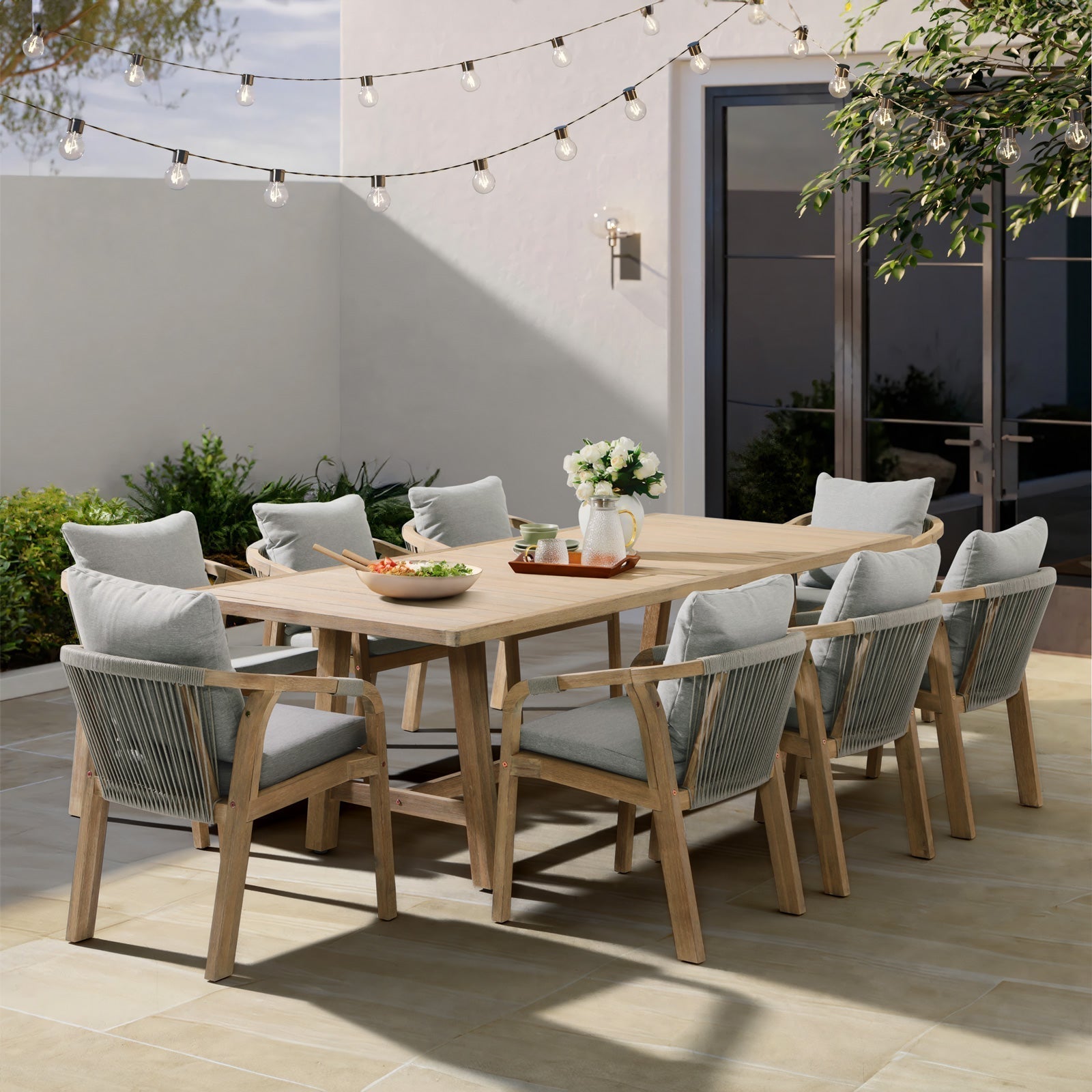
Rope-wrapped outdoor dining furniture is a fantastic choice for a modern, sleek look—it adds a unique texture to your outdoor dining space, making it feel fresh and on-trend. But since rope is a fabric-based material, it needs a little special care to keep its integrity, color, and shape, so it stays looking great for all your outdoor meals.
Care Tips:
1. Spot clean
Spills and stains are bound to happen during outdoor dinners—just use mild detergent and warm water to spot clean. A soft brush can help gently scrub away tough stains without damaging the rope fibers, keeping your dining chairs or table looking neat.
2. Dry thoroughly
Rope is great at holding moisture, which can lead to mildew if not dried properly! After cleaning or a rain shower, make sure to let your rope furniture dry completely—set it in a well-ventilated spot or wipe it down with a dry towel to speed up the process.
3. Protect from sun
Prolonged UV exposure can fade the rope fibers over time, dulling its color. To keep it looking vibrant, use cushion covers (if your rope set has cushions) or place an umbrella over your dining area—this shields the rope from harsh sun and extends its life.
Outdoor Cushions — Care by Material
Outdoor cushions add comfort but require proper maintenance to stay clean, dry, and fresh. Most cushion covers are made from polyester, acrylic, olefin, or solution-dyed fabrics.

General Cushion Care Principles
- Store when not in use: Especially during rain, storms, or long off-seasons.
- Use breathable storage bags: Prevents mildew and odors.
- Shake & air out cushions weekly: Reduces moisture buildup.
Cleaning & Fabric-Specific Tips
Different fabrics react differently to soap, sun, and water — so follow material-specific cleaning methods to avoid damage.
To help you clean outdoor sofa cushion covers based on their material, check out this detailed guide:👉 https://www.sunsitt.com/blogs/all/how-to-clean-outdoor-sofa-cushion-covers-a-material-based-guide

With the right care routine tailored to your outdoor dining furniture’s material, you’ll preserve beauty, function, and structural integrity — season after season. Investing a little time in cleaning and protection goes a long way in extending the life of your patio pieces!